BC Cargo and their Service Providers make every reasonable effort to ensure the accuracy of information on this website. If for any reason the information is not correct BC Cargo and their Service Providers are not responsible for an errors on these pages. Please verify any information in question prior to making a purchase.
BC Cargo and their Service Providers make every reasonable effort to ensure the accuracy of information on this website. If for any reason the information is not correct BC Cargo and their Service Providers are not responsible for an errors on these pages. Please verify any information in question prior to making a purchase.
The key difference is that a cargo trailer is always enclosed, offering full protection from the elements and theft, while an open utility trailer is not enclosed, leaving the cargo exposed. So, when people use “cargo trailer,” they are referring to a completely enclosed trailer, which is a specific type of trailer designed to haul and protect goods, whereas “utility trailer” refers to an open-top, exposed trailer.
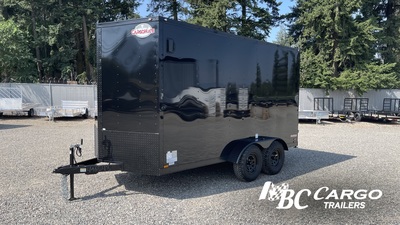
A 6 ft by 12 ft enclosed trailer weighs between approximately 1,200 and 1,800 pounds empty, with the exact weight varying significantly based on whether it has a single or tandem axle and the materials used in its construction. A single-axle version might be around 1,200 pounds, while a tandem-axle model could be closer to 1,800 pounds.
An enclosed trailer is worth it if you need to protect cargo from the elements and theft, want a secure mobile workspace, or require the versatility for custom interiors. While more expensive initially, an enclosed trailer offers superior security, allows for customization into a mobile shop or hobby space, and provides shelter from weather for people and goods. The value depends on your specific needs, comparing the higher cost against the enhanced protection, functionality, and peace of mind it provides for sensitive items, tools, or equipment
A high-quality, well-maintained enclosed trailer can last anywhere from 10 to 20 years or more, with factors like material quality, maintenance frequency, and environmental conditions significantly influencing its lifespan. Regular checks of tires, electrical systems, and the frame, along with prompt repairs for rust or structural damage, are crucial for maximizing a trailer’s longevity.
The 6×12 single-axle enclosed trailer is considered one of the most popular sizes due to its affordability, versatility, and good payload capacity for small to medium cargo and tools. However, popularity varies by application, with 7×14 trailers being a great option for larger hauls and 8.5-foot wide trailers being common for business and vehicle transport.
The most popular type of enclosed trailer is a standard enclosed cargo trailer because of its versatility for general hauling, security, and weather resistance. Smaller, specific-purpose enclosed trailers like 6×12 models are also popular for their reasonable cost and ability to handle various loads, from classic cars to equipment and “toys”.
The main benefits of an enclosed trailer include superior protection for cargo from weather and road debris, enhanced security against theft with lockable doors, and increased versatility for various uses, such as mobile storage, equipment hauling, or transporting expensive recreational vehicles like snowmobiles or ATVs. They provide a versatile and protected mobile space for goods, tools, and equipment, offering convenience, durability, and peace of mind.
A cargo trailer’s carrying capacity, also known as its payload, varies significantly by model, but can range from a few thousand pounds for smaller utility trailers to over 10,000 pounds for larger gooseneck trailers. To find the specific capacity, check the trailer’s Gross Vehicle Weight Rating (GVWR) label, which indicates the maximum combined weight of the trailer and its cargo, then subtract the trailer’s empty weight to find the usable payload capacity.