BC Cargo and their Service Providers make every reasonable effort to ensure the accuracy of information on this website. If for any reason the information is not correct BC Cargo and their Service Providers are not responsible for an errors on these pages. Please verify any information in question prior to making a purchase.
BC Cargo and their Service Providers make every reasonable effort to ensure the accuracy of information on this website. If for any reason the information is not correct BC Cargo and their Service Providers are not responsible for an errors on these pages. Please verify any information in question prior to making a purchase.
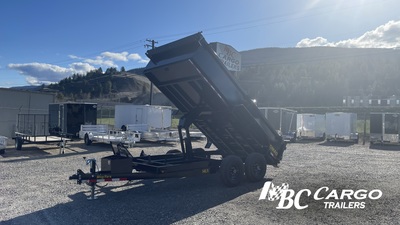
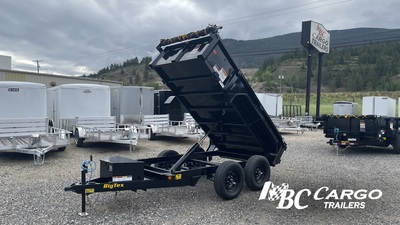
Hydraulic dump trailers are the same as standard dump trailers in most cases. The mechanism which causes the trailer to lift on one side of the bed is hydraulic. It works when fluid is used to power it by a hoist system.
Hydraulic dump trailers are used to haul and unload bulk materials with minimal manual effort by using a hydraulic system to tilt the trailer’s bed. They are essential in industries like construction, landscaping, and agriculture for transporting and disposing of materials such as gravel, sand, dirt, debris, soil, and waste. The hydraulic lift provides a safer, faster, and more efficient way to unload materials compared to traditional methods, reducing labor and project timelines
A dump truck is a single, self-contained vehicle with its own engine and chassis, while a dump trailer is a separate, unpowered unit that requires a truck or other vehicle to tow it. Key differences include cost, maintenance, and licensing requirements; dump trucks are more expensive and complex to maintain, often require a special CDL license to operate, and are better suited for large-scale, daily operations. Dump trailers are more affordable, more versatile as they can be detached for other uses, and are a more economical choice for smaller jobs or businesses with multiple towing vehicles.
Before buying a hydraulic dump trailer, you should consider your specific needs by evaluating the materials you’ll haul to determine the required load capacity and trailer size. Match the trailer’s size and weight to your vehicle’s towing capacity for safe operation. Assess the quality of materials and construction for durability, and choose a lift system and type of trailer (e.g., gooseneck vs. bumper pull) that best suits your work. Additionally, consider maintenance requirements, the availability of manufacturer support, and read reviews to help you make an informed decision.
The maximum weight capacity of a hydraulic dump trailer can range significantly, from a few thousand pounds to over 25,000 pounds. The specific weight capacity depends entirely on the trailer’s model, manufacturer, and configuration, with smaller, standard-duty models typically holding under 10,000 lbs and heavy-duty models potentially exceeding 20,000 lbs. To find the exact capacity for a particular trailer, check its Gross Vehicle Weight Rating (GVWR) sticker or the manufacturer’s specifications.